
The Stack Shift Map: What Your GTM Architecture Looked Like Before Context Infrastructure (And What It Looks Like Now)
A before/after framework for seeing the shift from feature-stack thinking to context-stack thinking, the same signal from Monday’s post, made visual.

Monday, I wrote about a quiet inflection point. The Model Context Protocol hit a major spec milestone. A dev tool went GA on top of it the same week. And underneath both, GTM vendors had spent the better part of 2026 quietly wiring context infrastructure into platforms operators already use.
The response to that post surprised me. Not because operators disagreed with the thesis, because almost nobody could picture it. “Context surface” is a real concept. It’s also an abstract one. You can’t screenshot a context surface. You can screenshot a stack diagram.
So this week’s second pass at the same idea isn’t a new argument. It’s the same argument, redrawn as something you can look at, save, and hold up against your own stack.
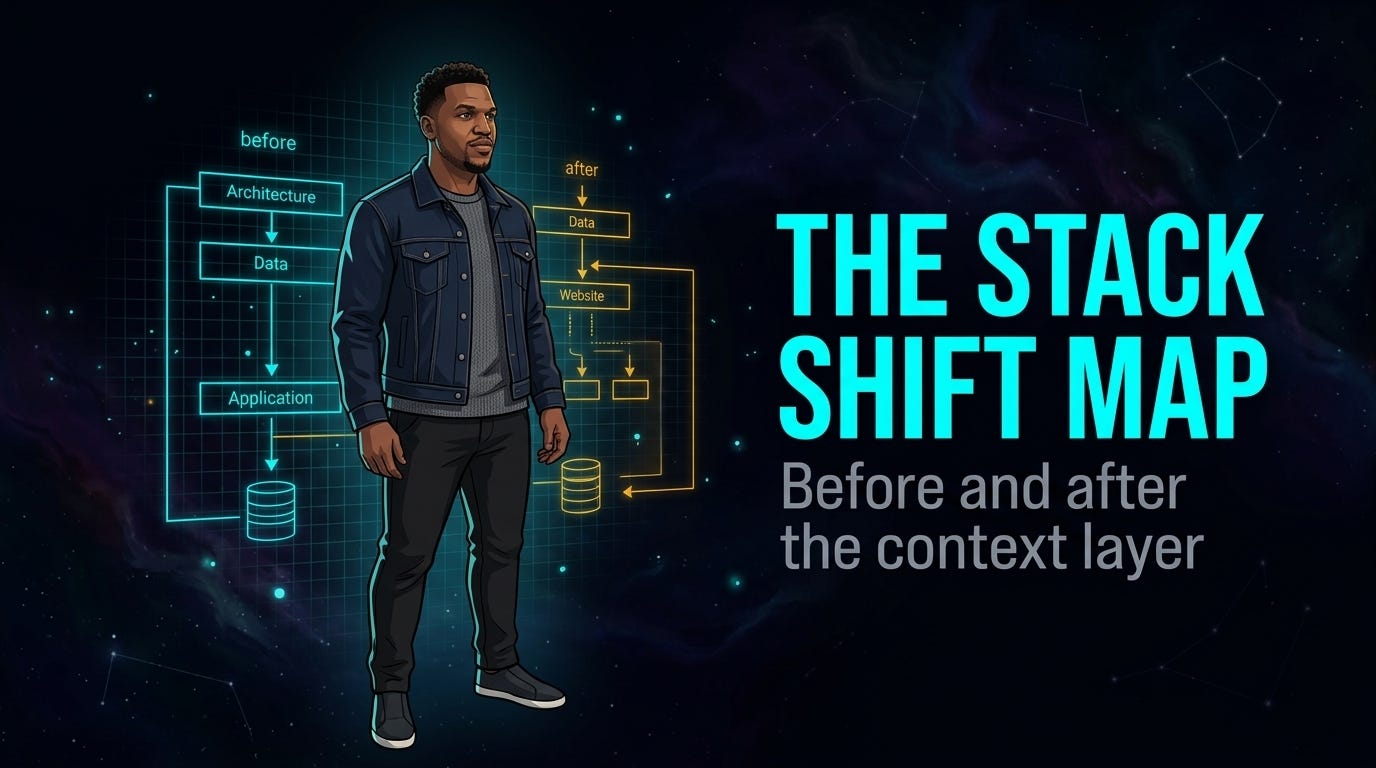
That’s the Stack Shift Map: a before/after architecture diagram showing what changed structurally when GTM platforms moved from tool-siloed data to shared, agent-readable context.
Why a diagram succeeds where the argument alone didn’t
Most operators evaluate a new GTM tool the way you’d evaluate a new appliance: what does it do, does it do it well, does it fit the budget. That’s feature-stack thinking, and for a decade it was the right lens, because tools mostly didn’t talk to each other. Your CRM held the accounts. Your enrichment tool held the firmographics. Your outbound tool held the sequences. Integration meant a Zapier connector or a nightly CSV export, and everyone accepted that as the ceiling.
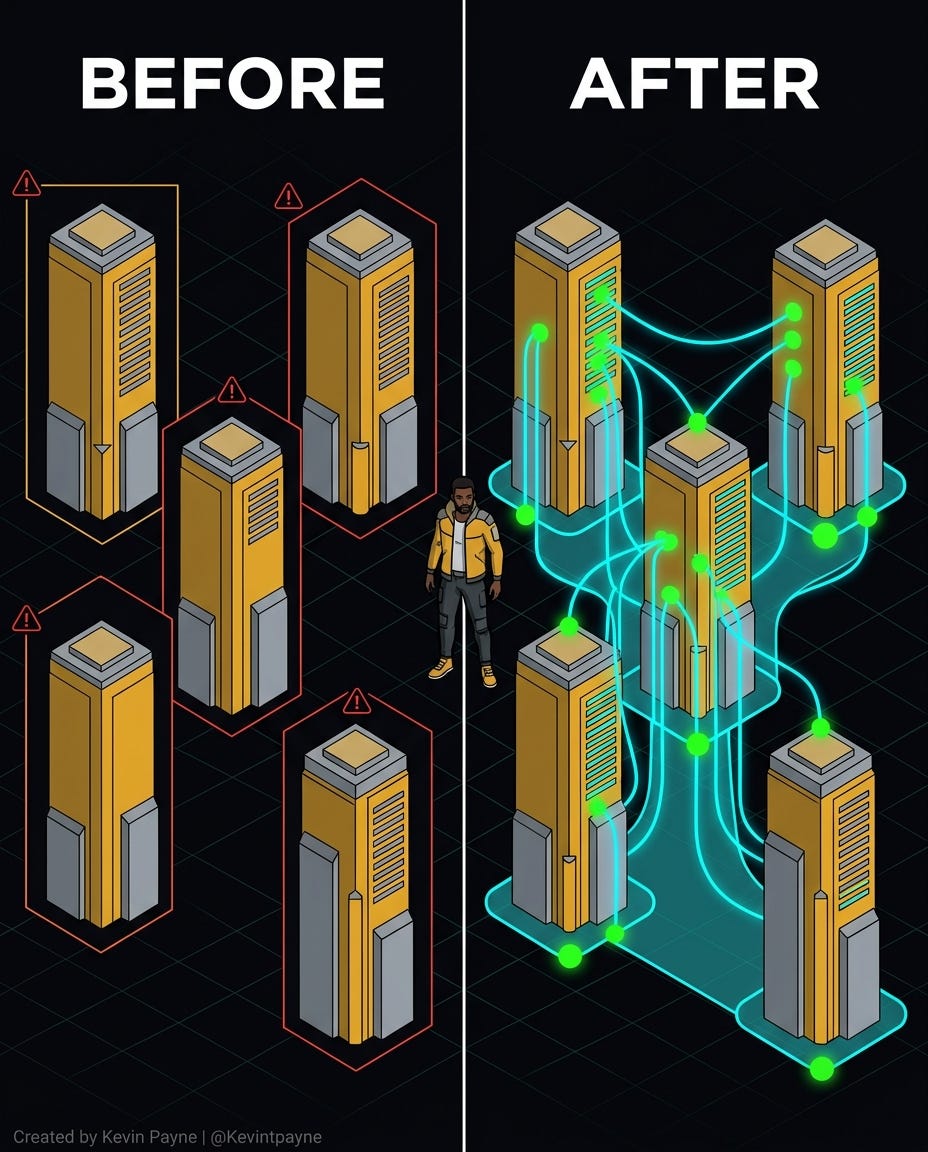
The Stack Shift Map’s “Before” state captures that world accurately: a set of parallel towers, each with its own data, each exposing an API but not a shared context layer. Information moved between them, but it moved as a payload, a snapshot of a fact at a moment in time, not a live, queryable context that an agent could reason over.
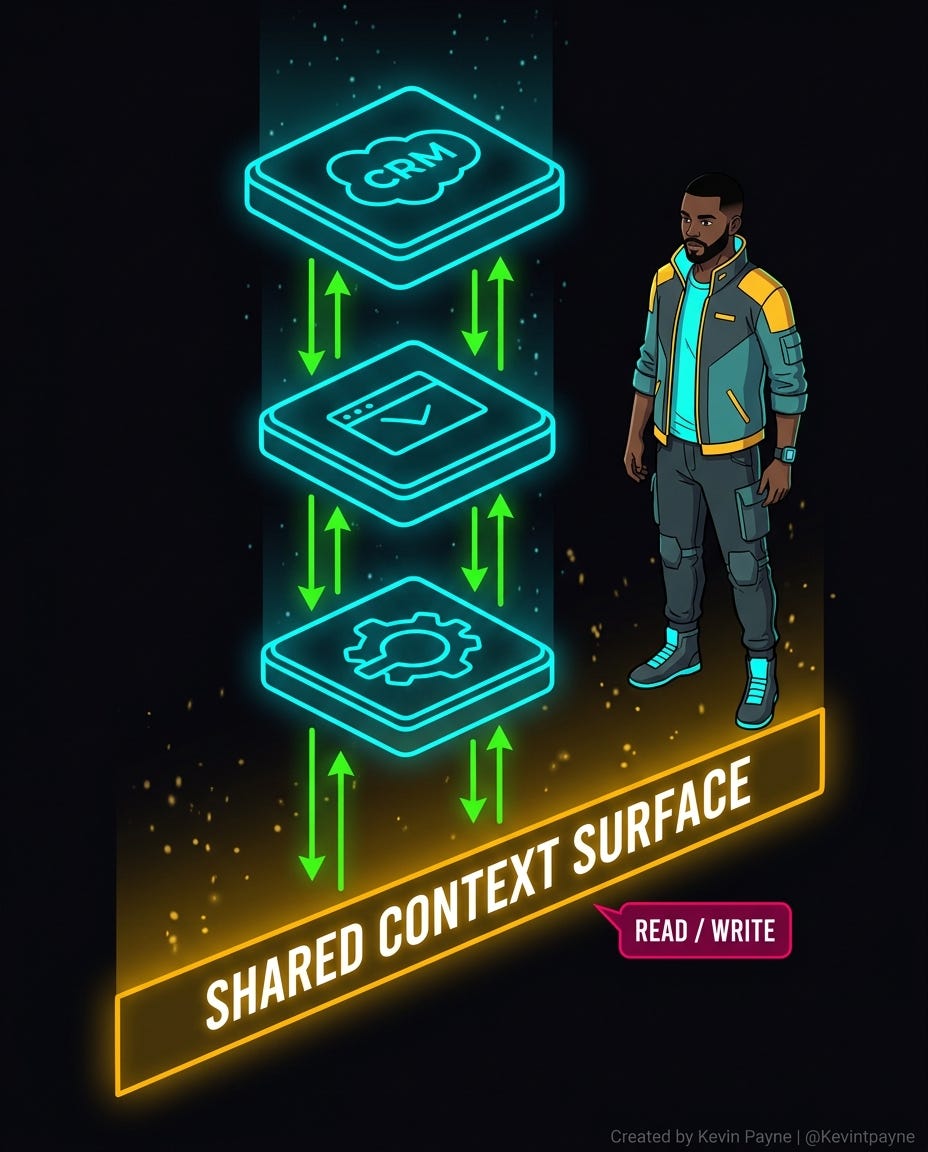
The “After” state is structurally different, not just faster. In a context-infrastructure stack, platforms expose a shared surface that agents can read from and write to directly, using a common protocol instead of a custom integration per pair of tools. Salesforce’s Agentforce client, Microsoft Copilot’s MCP-native surface, and 6sense’s MCP server are three different products solving three different problems, but architecturally they now speak the same protocol dialect. That’s the shift the diagram is built to show: not “these tools got new features,” but “these tools stopped being islands.”
The framework: three layers to check before you draw your own map
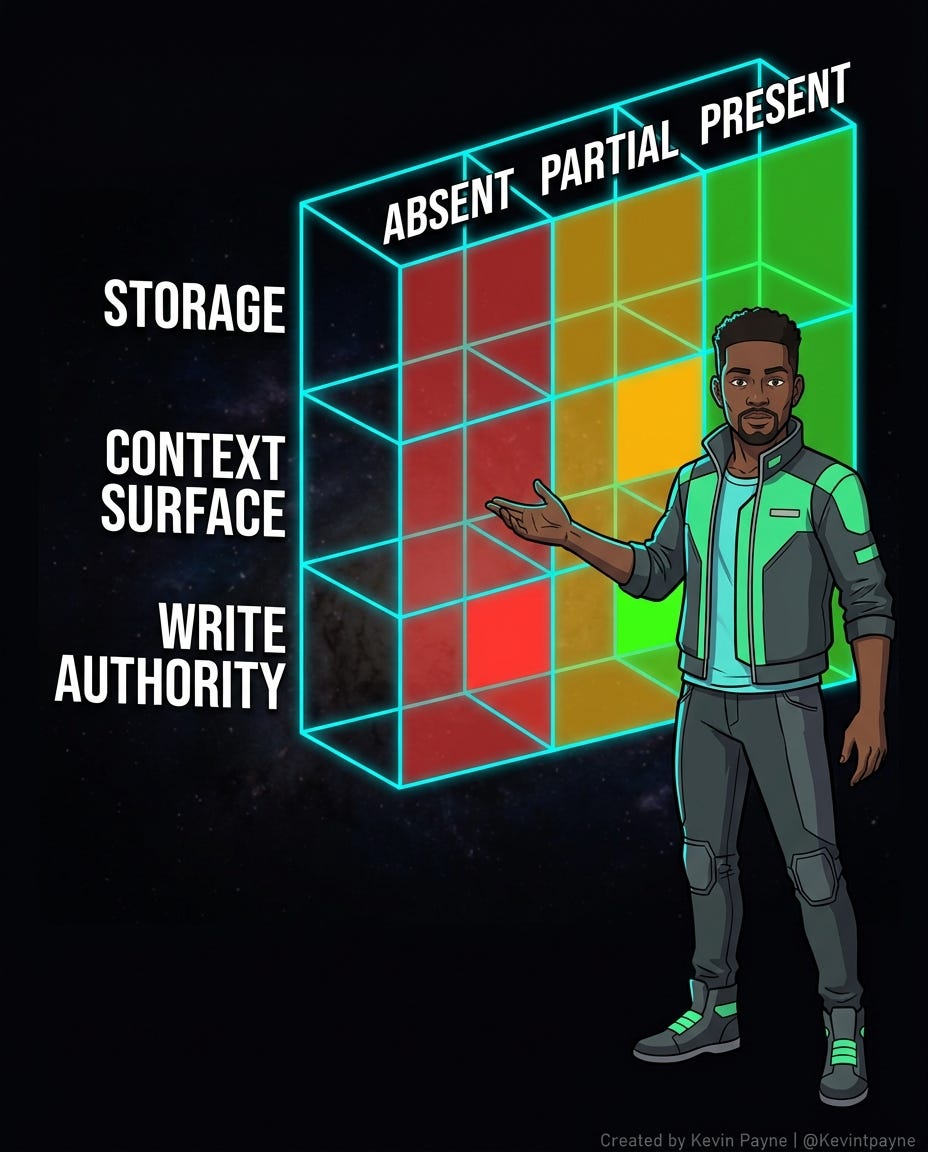
If you’re going to map your own stack, look at each platform through three layers, not one:
Layer 1 — Storage. Where does the platform hold its data, and is that store exposed at all outside its own UI? This is the old question, and most tools already answer it well.
Layer 2 — Context Surface. Can an external agent query that data in a structured, real-time way, or only pull a static export? This is the layer most operators have never had to evaluate before, because until recently almost nothing existed on the other end of that query.
Layer 3 — Write Authority. If an agent can read the context surface, can it also act on it, and under what governance? This is the layer with the highest stakes and the one most stacks handle worst right now. A platform that exposes rich context but gives agents unchecked write access is a bigger risk than one that exposes nothing at all.
Map your own stack against these three layers, tool by tool, and you’ll usually find something uncomfortable: your most “modern” tool by reputation might sit at Layer 1, while a tool you think of as legacy might have quietly shipped a real context surface. Reputation lags architecture. The map corrects for that.
What this looks like applied
In a Series A SaaS operator role, this framework changed how a stack evaluation got run this quarter. The instinct going in was to rank vendors by feature parity same instinct most operators default to. Running each platform through the three-layer check instead surfaced a different ranking entirely. Two platforms that looked feature-equivalent on paper split apart completely at Layer 2: one had a real context surface an agent could query live, the other only offered scheduled batch exports dressed up as an “integration.” That distinction wouldn’t have shown up in a feature comparison. It only shows up when you draw the map.
The practical output wasn’t a new tool purchase. It was a rewritten evaluation checklist that now leads with Layer 2 and Layer 3 questions before a single feature gets discussed, and a flag on one existing platform whose write authority needed tighter governance before any agent workflow touched it in production.
How to build your own Stack Shift Map
Draw two columns. Left column: every GTM tool currently in your stack. Right column, three sub-columns: Storage, Context Surface, Write Authority. For each tool, mark each layer as Present, Partial, or Absent. Don’t guess check vendor documentation or ask your rep directly whether MCP or an equivalent protocol is supported, and whether it’s read-only or read/write.
What you’ll typically find is a jagged line, not a clean before/after split. Some tools moved early. Some haven’t moved at all. That jagged line is more useful than a single “we’re context-ready” checkbox, because it tells you exactly where your next integration risk or opportunity sits.
The takeaway
Monday’s post argued that the moat shifted from owning tools to owning context. This week’s map is the same claim, drawn so you can point at it. If you can’t sketch your own stack across those three layers right now, that’s the gap worth closing before your next tool decision, not after.
Framework: The Stack Shift Map. Cited: Salesforce, Microsoft Copilot, 6sense.